Key Takeaways
- Maintenance is Key: Neglecting routine maintenance is the root cause of many major roofing problems. Proactive care prevents small issues from becoming costly emergencies.
- Water is the Enemy: Ponding water, which is any water standing for more than 48 hours, accelerates roof aging, stresses the structure, and is a leading cause of leaks.
- Installation Matters: A significant number of premature roof failures are due to faulty installation. Choosing a qualified, reputable contractor is critical.
- Common Failure Points: Be aware of issues like membrane blistering, punctures from foot traffic, shrinkage that pulls away from walls, and failed flashing around rooftop equipment.
A commercial roof is a major investment — and like any building system, it performs best when it’s monitored, maintained, and cared for proactively. Many roofing problems start small and go unnoticed until they begin affecting your operations, tenants, or interior spaces. The good news is that most issues are preventable with routine inspections and timely repairs.
Below are 10 common commercial roofing issues every building owner or property manager should be aware of, along with how to prevent them and what to watch for during inspections.
10 Commercial Roofing Issues
1. Inadequate Maintenance
A commercial roof doesn’t fail overnight — problems develop slowly. When routine maintenance is skipped, minor issues such as loose flashing, deteriorated sealant, or clogged drains can evolve into costly repairs.
Regular inspections help identify:
- Slipping or damaged flashing
- Ponding water
- Open seams or unfilled pitch pockets
- Membrane wear
Catching these early can prevent major structural issues and greatly extend your roof’s lifespan.
2. Ponding Water
Any water that remains on a roof longer than 48 hours is considered ponding. This is one of the most common and avoidable commercial roofing issues.
Why it matters:
- Water can saturate insulation and degrade membrane materials.
- Excess weight stresses the roof deck and can accelerate sagging.
Proper drainage design, routine gutter cleaning, and periodic inspections are key to keeping your roof free of standing water.
3. Roof Leaks
If water is making its way into the building, the damage has already begun. Leaks can originate from:
- Failed flashing
- Open seams
- Punctures
- Poor roof transitions
- HVAC or plumbing penetrations
A professional roofing contractor should locate the source, repair it properly, and assess any interior damage to prevent future deterioration.
4. Tenting or Billowing
When the roofing membrane is not securely attached to the substrate, strong wind can cause it to lift, tent, or billow. This separation exposes the roof to water infiltration and increases the risk of system failure.
Tenting or billowing usually indicates:
- Poor installation
- Incorrect adhesive application
- Fastener failure
A qualified contractor will need to re-secure the membrane before wind damage worsens.
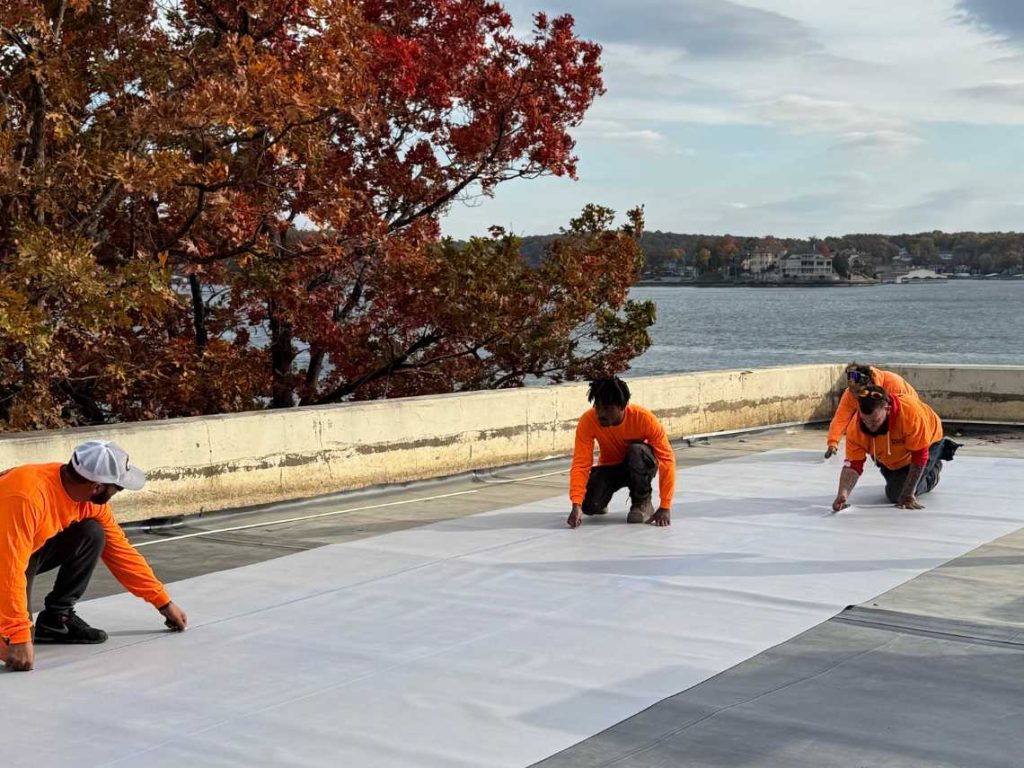
5. Faulty Installation
Even the best roofing materials will underperform if installed incorrectly. Poor installation is one of the leading causes of premature roof failure.
Common signs include:
- Misaligned seams
- Loose flashing
- Inadequate fastening
- Poor drainage layout
Choosing a reputable commercial roofing contractor with proven experience is the best protection against installation-related problems.
6. Blistering, Splitting, and Bridging
These issues occur when air or moisture becomes trapped within the roofing system. They’re seen most often in BUR (Built-Up Roofing) systems but can occur on others as well.
What causes them:
- Inconsistent installation temperatures
- Poor adhesion
- Aging materials
- Moisture infiltration
Blistering and splitting should be evaluated quickly to avoid membrane failure or voided warranties.
7. Punctures and Surface Damage
Single-ply roofing systems like TPO and EPDM are durable but can be punctured by:
- Heavy foot traffic
- Dropped tools
- Sharp debris
- Rooftop equipment service
A small puncture can allow significant water infiltration, especially after severe weather. Establishing controlled walk paths and limiting roof access to trained personnel can help reduce damage.
8. Substandard Repairs or Materials
Not all repair materials are created equal. When repairs are performed using products not approved by the manufacturer, or when shortcuts are taken to save time or cost, the result is often more damage — not less.
Improper patching can:
- Void manufacturer warranties
- Lead to recurring leaks
- Create weak points in the membrane
Always ensure repairs are completed using compatible materials and manufacturer-approved processes.
9. Rooftop Accidents
Accidents can occur anytime someone is on the roof — whether it’s a contractor, HVAC technician, or maintenance staff. Slips, dropped equipment, or improper handling of tools can cause damage to the membrane.
To reduce risk:
- Require proper PPE.
- Establish safety protocols for anyone accessing the roof.
- Limit access to trained personnel.
A safer roof is also a healthier roof.
10. Shrinkage
Roof membrane shrinkage can cause flashings to pull away from walls or curbs, leading to open gaps and water intrusion. In some cases, uncured rubber membranes can crack or tear as they contract over time.
Signs of shrinkage include:
- Flashings pulling back
- Membrane tension
- Visible cracking
Shrinkage issues should be corrected immediately — ignoring them can result in major repairs or full system replacement.
Protect Your Investment with Expert Commercial Roofing Services
Understanding these common issues is the first step toward protecting your commercial roof. With proactive care, many problems can be avoided entirely, saving you money and preventing interruptions to your business.
All Seasons Roofing, LLC has provided reliable commercial roofing services to Central Missouri businesses since 2004. Whether you need flat roof repairs, replacement options, or guidance on retrofitting a metal roof with a membrane system, our team is here to help.
Contact All Seasons Roofing today to schedule an inspection or discuss your commercial roofing needs.
Your roof is a major investment — let us help you protect it.
Frequently Asked Questions
1. What is the most common cause of commercial roof failure?
The most common cause is a lack of routine maintenance. Small, fixable issues like clogged drains, minor punctures, or failing sealant are often ignored until they develop into major leaks and widespread damage, leading to premature roof failure.
2. How often should a commercial roof be inspected?
It’s recommended to have your commercial roof professionally inspected at least twice a year, typically in the spring and fall. You should also schedule an inspection after any severe weather event, such as a hailstorm or high winds.
3. Is ponding water on my flat roof a serious problem?
Yes. Any water that remains on your roof for more than 48 hours can accelerate the deterioration of the roofing membrane, add significant weight stress to the structure, and eventually lead to leaks. It’s a clear sign of a drainage problem that needs to be addressed.
4. How can I prevent punctures on my TPO or EPDM roof?
The best way to prevent punctures is to limit roof access to authorized personnel only. For areas that require frequent foot traffic, such as around HVAC units, you should have designated walkway pads installed to protect the membrane from tools, boots, and equipment.
5. Why are my roof seams separating or my flashing pulling away?
Seam separation and pulling flashings are often caused by membrane shrinkage due to age and UV exposure, or from the natural expansion and contraction of the building. These are critical issues that create direct paths for water entry and should be repaired immediately by a professional.