Key Takeaways
- A Superior Alternative: Retrofitting a metal roof with a single-ply membrane system is often a better long-term solution than coating or full replacement, especially for aging PBR or SSR-24 systems.
- Solves Core Problems: Unlike coatings that offer a temporary fix, retrofitting eliminates the root causes of leaks, such as fastener back-out and panel movement.
- Long-Term Value: While the initial investment may be higher than coating, a retrofit provides a new, fully warranted roof with a lifespan of 20-30+ years, resulting in a lower overall lifecycle cost.
- Minimal Disruption: The process allows business operations to continue uninterrupted, as the existing metal roof is not torn off.
- Enhanced Performance: Retrofitting improves energy efficiency by adding insulation and provides superior watertight integrity with a continuous membrane surface.
If your commercial building has a metal roof that’s aging, leaking, or becoming increasingly expensive to maintain, you’re likely weighing your options. Many building owners are told their only choices are to coat the roof or tear it off and replace it entirely. What often gets overlooked is a third—and frequently better—option: retrofitting the existing metal roof with a membrane system.
For owners with PBR panel systems or standing seam roofs like SSR-24, retrofitting offers a long-term, cost-effective solution. It delivers better performance, improved watertight integrity, and a longer service life than coatings alone. This guide explains what a metal roof retrofit is, how the process works, its benefits, and why it’s often a smarter investment than coating.
What Is a Commercial Metal Roof Retrofit?
A metal roof retrofit involves installing a new roofing system directly over an existing metal roof, rather than removing it or simply applying a coating. Instead of relying on sealants and coatings to extend the life of aging panels, a retrofit creates a new, fully warranted roofing assembly. This is typically done using single-ply membranes like TPO, EPDM, or PVC, while leaving the original metal roof in place as a structural substrate.
This approach is a proven solution for common systems, including:
- PBR (Purlin Bearing Rib) metal roofs
- Standing seam systems like SSR-24
- Roofs on warehouses, manufacturing facilities, retail buildings, and agricultural structures
The existing metal roof remains, but its inherent weaknesses are permanently eliminated by the new, modern system installed above it.
Why Metal Roofs Eventually Fail
Metal roofs are known for their durability, but they are not maintenance-free or permanent. Over time, building owners often experience recurring issues that compromise the roof’s integrity. These problems include:
- Fastener Back-Out: Exposed fasteners loosen over time, breaking the seal and allowing water entry.
- Thermal Movement: The constant expansion and contraction of metal panels can cause seams and laps to separate.
- Leaks at Penetrations: Seals around vents, pipes, and HVAC units are common failure points.
- Oxidation and Corrosion: Rust can weaken the panels and create vulnerabilities.
- Ineffective Patching: Repeated repairs often fail to address the underlying cause of leaks.
Standing seam systems like SSR-24 perform well structurally, but once leaks develop, repairs can become invasive and expensive. PBR panel systems are even more prone to long-term leakage due to their thousands of exposed fasteners. When leaks become persistent, coatings are often suggested, but this approach has significant limitations.
Why Coating a Metal Roof Often Falls Short
Roof coatings are frequently marketed as a quick, low-cost fix for aging metal roofs. While coatings can be useful in very limited, specific situations, they are rarely the best long-term solution.
Limitations of Coatings:
- They Don’t Stop Movement: Coatings do not stop the thermal expansion and contraction of the metal panels underneath.
- Adhesion is Critical: Their effectiveness relies heavily on perfect surface preparation, which is difficult to achieve.
- Frequent Reapplication: Coatings degrade over time and require reapplication every few years to remain effective.
- Weaknesses Remain: Coatings do not eliminate the problematic seams or thousands of fasteners.
- Limited Warranties: Warranties for coatings are often short-term or heavily dependent on maintenance schedules.
Most importantly, coatings simply cover the existing roof’s weaknesses. As the metal expands and contracts, the coating will eventually crack, split, or separate. This puts you right back where you started, facing the same leaks a few years later.
How a Metal Roof Retrofit Works
A proper retrofit system is an engineered solution, not just an installation. The process is methodical and designed to create a durable, new roofing assembly.
The process typically includes:
- Inspection and Evaluation: A thorough assessment of the existing metal roof confirms it is structurally sound and suitable to remain in place as the substrate for the new system.
- Stabilization: Any existing structural, fastener, or panel issues are addressed to stabilize the metal roof before new materials are installed.
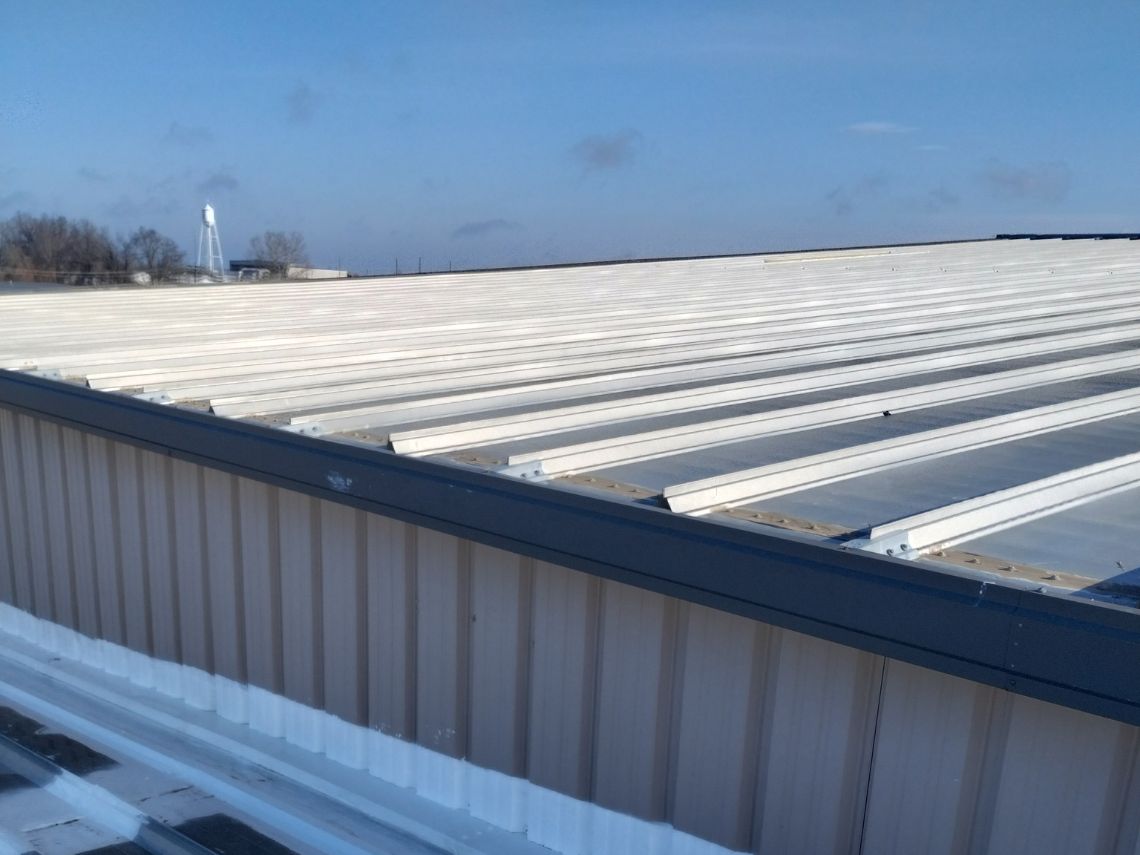
- Insulation Installation: Flute-fill insulation, cut to match the metal roof profile (PBR ribs or standing seam geometry), is installed to fill the voids and create a uniform surface.
- Cover Board and R-Value: Rigid ISO insulation and/or a cover board is installed over the flute fill. This increases the overall R-value for better thermal performance and provides a smooth, durable substrate for the membrane.
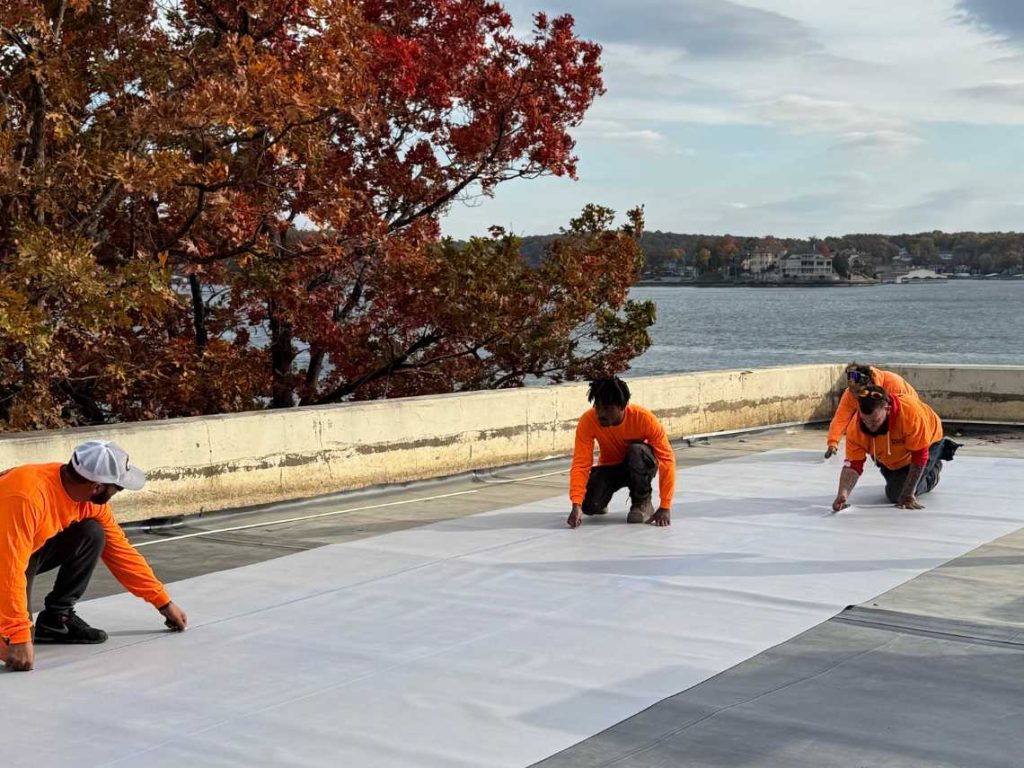
- Membrane Installation: A fully adhered single-ply membrane system (TPO, PVC, or EPDM) is installed over the insulation assembly. This creates a continuous, watertight surface that is independent of metal panel movement.
- Detailing: All penetrations, perimeters, and transitions are professionally detailed to ensure long-term watertight integrity.
The result is a new roofing system that performs like a modern flat roof—without the cost, disruption, or waste of a full tear-off.
Key Benefits of Retrofitting a Metal Roof
- Long-Term Watertight Performance: Retrofitting eliminates thousands of exposed fasteners and metal seams, the most common sources of leaks. The new single-ply membrane provides a continuous, sealed surface.
- Extended Roof Life: Instead of adding a temporary layer, a retrofit creates a new roof system that can last 20 to 30 years or more, depending on the membrane selected.
- Lower Lifecycle Cost: While coatings may seem cheaper upfront, repeated recoating and ongoing repairs add up. A retrofit is a one-time investment with predictable, long-term costs.
- Minimal Disruption to Operations: Because the existing metal roof stays in place, business operations below can continue with little to no interruption. There is no tear-off debris or exposure to the elements.
- Improved Energy Efficiency: Retrofitting allows for significant insulation upgrades. Combined with reflective “cool roof” membranes, this can dramatically reduce heating and cooling costs.
- Structural Preservation: The original metal roof continues to serve as a structural deck, reducing landfill waste and preserving the building’s integrity.
- Stronger Warranty Options: Unlike coatings, professionally installed retrofit systems can qualify for comprehensive manufacturer-backed warranties, offering real, long-term protection for your investment.
Is a Metal Roof Retrofit Right for Your Building?
A retrofit may be the ideal solution for your property if:
- Your metal roof has persistent leaks that repairs can’t fix.
- You have already coated the roof once (or more) with poor results.
- You are looking for a permanent fix, not just another round of repairs.
- A full tear-off and replacement is too disruptive or cost-prohibitive.
- You plan to own the building for many years to come and want a reliable, low-maintenance roof.
The best way to determine the right course of action is through a professional evaluation from an experienced commercial roofing contractor.

Work with a Contractor Who Understands Retrofit Systems
Metal roof retrofits require specialized experience, careful planning, and proper system selection. They are not one-size-fits-all projects and must be engineered to meet the specific needs of each building.
At All Seasons Roofing, we specialize in retrofitting commercial metal roofs, including PBR and SSR-24 systems. We utilize proven single-ply membrane solutions designed for durable, long-term performance. We partner with building owners to help them understand their real options, avoid short-term fixes, and protect their investment with confidence.
If your aging metal roof is a constant source of problems, remember that coating is not your only option. A metal roof retrofit creates a new, reliable roofing system that solves problems at their source and delivers lasting value for your property.
Contact All Seasons Roofing today to schedule a comprehensive inspection and find out if a metal roof is the right solution for your building.
Frequently Asked Questions (FAQ)
1. Can any metal roof be retrofitted?
Most structurally sound metal roofs are candidates for a retrofit. A professional inspection is needed to confirm the existing roof deck and purlins can support the new system. Severe corrosion or structural damage might make a roof unsuitable.
2. How does a retrofit compare in cost to a full replacement?
A metal roof retrofit is almost always more cost-effective than a full tear-off and replacement. It saves on labor, disposal fees, and avoids the business disruption associated with removing the old roof.
3. Will a retrofit increase the weight on my building’s structure?
Modern retrofit systems are lightweight. The new membrane and insulation typically add only 2-4 pounds per square foot, which is well within the load capacity of most commercial structures.
4. How long does a metal roof retrofit last?
A professionally installed retrofit system using a high-quality TPO, PVC, or EPDM membrane can be expected to last 20 to 30 years or more, and it often comes with a manufacturer’s warranty.
5. Does retrofitting improve my building’s energy efficiency?
Yes, significantly. The process includes adding a layer of rigid insulation, which increases your roof’s R-value. When paired with a reflective white membrane, a retrofit can lower cooling costs by 15-30%.