Key Takeaways
- When to Repair: Repairs are best for younger roofs (under 10-12 years) with localized, minor damage like small punctures or seam separations, especially when the underlying insulation is still dry.
- When to Replace: Replacement is necessary for older roofs nearing the end of their lifespan (20-30 years), or when there is widespread damage, recurring leaks, and wet insulation.
- Cost Factor: While repairs are cheaper upfront ($500 – $5,000), constant fixes can add up. A full replacement ($5 – $15 per sq. ft.) is a larger investment but often provides better long-term value and energy savings.
- Proactive Maintenance is Key: Regular inspections, clear drainage, and prompt attention to small issues can significantly extend your roof’s life and delay the need for a full replacement.
The Critical Decision Every Building Owner Faces
Flat roofs are a practical choice for commercial buildings, offering valuable space for HVAC units and solar panels while being cost-effective. However, every roof has a limited lifespan. Sooner or later, you will face a critical decision: should you repair the roof you have or replace it altogether?
The choice isn’t always simple. A repair might buy you a few more years, but a full replacement could save you money and headaches in the long run. This guide breaks down the key signs, cost considerations, and influencing factors to help you make the right call for your commercial property.
Common Flat Roof Problems That Lead to Big Decisions
Flat roofs are efficient, but their design makes them prone to specific issues that force a repair or replacement choice. Understanding the root cause of a problem is the first step toward a solution.
- Leaks & Ponding Water: Water that fails to drain within 48 hours adds significant weight, stresses seams, and can eventually seep into the insulation and building structure.
- Membrane Damage: Punctures, tears, and cracks are common results of foot traffic, dropped tools, or severe weather like hail.
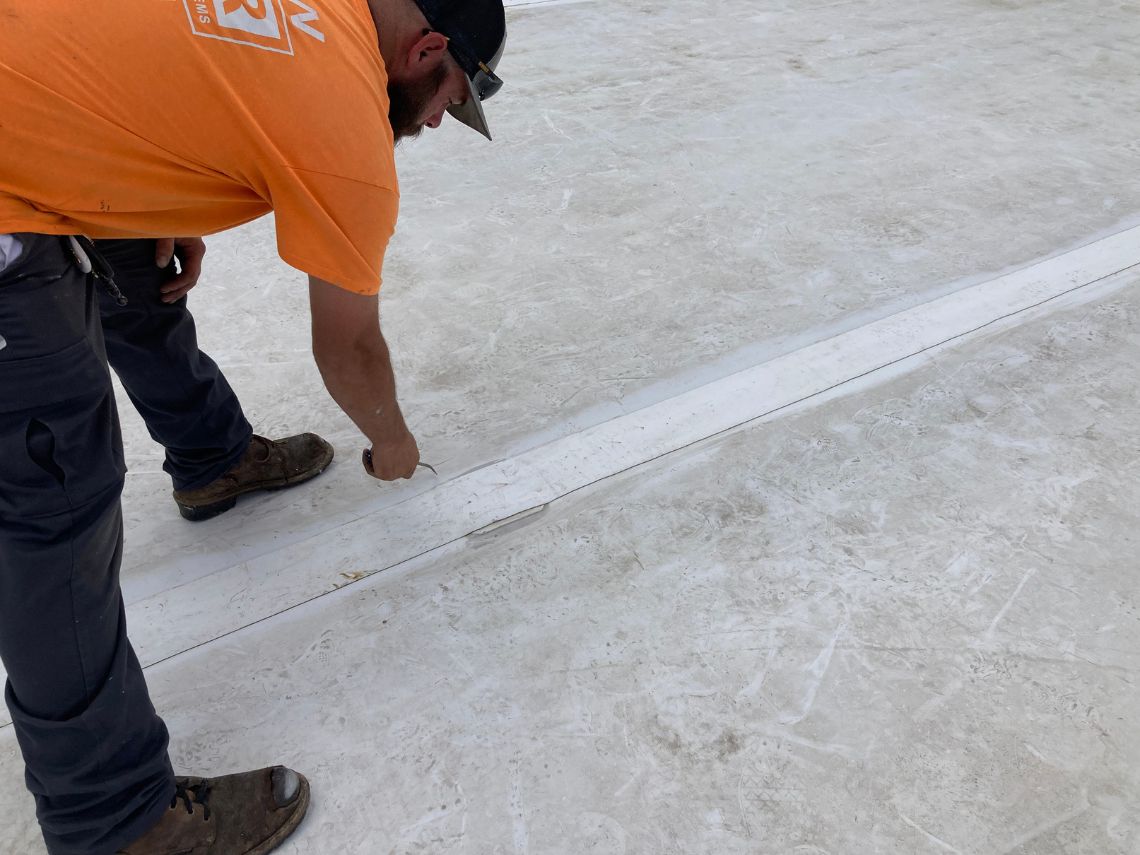
- Seam Failures: The seams are often the weakest point on a flat roof. Over time, adhesives can fail and membranes can pull apart, creating easy entry points for water.
- Blistering & Bubbling: Trapped air or moisture vaporizing beneath the membrane can cause bubbles or blisters to form on the surface, indicating a loss of adhesion.
- Aging & UV Damage: Constant sun exposure breaks down roofing materials, causing them to become brittle, shrink, and lose their flexibility.
When Do Flat Roof Repairs Make Sense?
Not every roofing issue is a red flag for replacement. In many cases, a professional repair is the smartest and most cost-effective choice. Repairs are generally recommended when:
- The damage is localized. If you have a small leak, a few punctures, or seam separation in one specific area, these can often be patched or resealed effectively.
- Your roof is relatively young. For a flat roof that is less than 10-12 years old, targeted repairs can restore its performance and extend its life without the high cost of replacement.
- The insulation and roof deck are intact. If a roof inspection confirms that water has not penetrated deep into the roofing system, simple fixes on the surface can be sufficient.
- Your budget is limited. Repairs cost significantly less upfront and can provide a durable solution that buys you valuable time to plan and budget for an eventual replacement.
A high-quality repair can add another 5-10 years of service life, especially when paired with a proactive maintenance plan.
When Is a Full Roof Replacement the Better Option?
Sometimes, repairs are just a temporary fix for a failing system. A full replacement is often the more strategic, long-term investment if you notice these signs:
- The roof is near the end of its expected lifespan. Most flat roofing systems last 20-30 years. Once your roof exceeds this age, repairs become less effective and more frequent.
- Leaks are widespread and persistent. If you fix one leak only to have another appear somewhere else, it’s a strong indicator that the entire system is failing.
- The membrane is brittle, shrinking, or cracking. Once the roofing material loses its flexibility due to age and UV exposure, patches and sealants won’t hold properly.
- Water has saturated the insulation. Wet insulation loses its R-value, leading to higher energy bills. It can also cause rot, mold, and structural damage to the roof deck below.
- Repair costs are becoming excessive. If you find yourself spending thousands on repairs every year, you’ve reached a point where that money would be better invested in a new, reliable roof.
Think of a replacement as hitting the reset button. You solve today’s problems while gaining improved energy efficiency and peace of mind for decades to come.
Comparing the Costs: Repair vs. Replacement
Cost is a major driver in this decision. Here is a general breakdown of what you can expect:
- Flat Roof Repairs: Typically range from $500 to $5,000, depending on the size of the damaged area and the complexity of the fix.
- Flat Roof Replacement: Can cost anywhere from $5 to $15 per square foot. For a large commercial building, this can easily amount to $50,000 or more.
While replacement has a high upfront cost, a life-cycle cost analysis often reveals it as the smarter long-term investment, especially once a roof passes a certain age or condition threshold.
5 Key Factors That Influence Your Decision
Still unsure? Consider these five factors to determine whether repair or replacement is right for your building.
- Age of the Roof: This is the most important factor. A 5-year-old roof with a leak almost always warrants repair. A 25-year-old roof with the same leak may be a candidate for replacement.
- Extent of the Damage: Are we talking about a single puncture or widespread deterioration across 30% or more of the roof surface? An infrared scan can help determine if moisture has infiltrated the insulation.
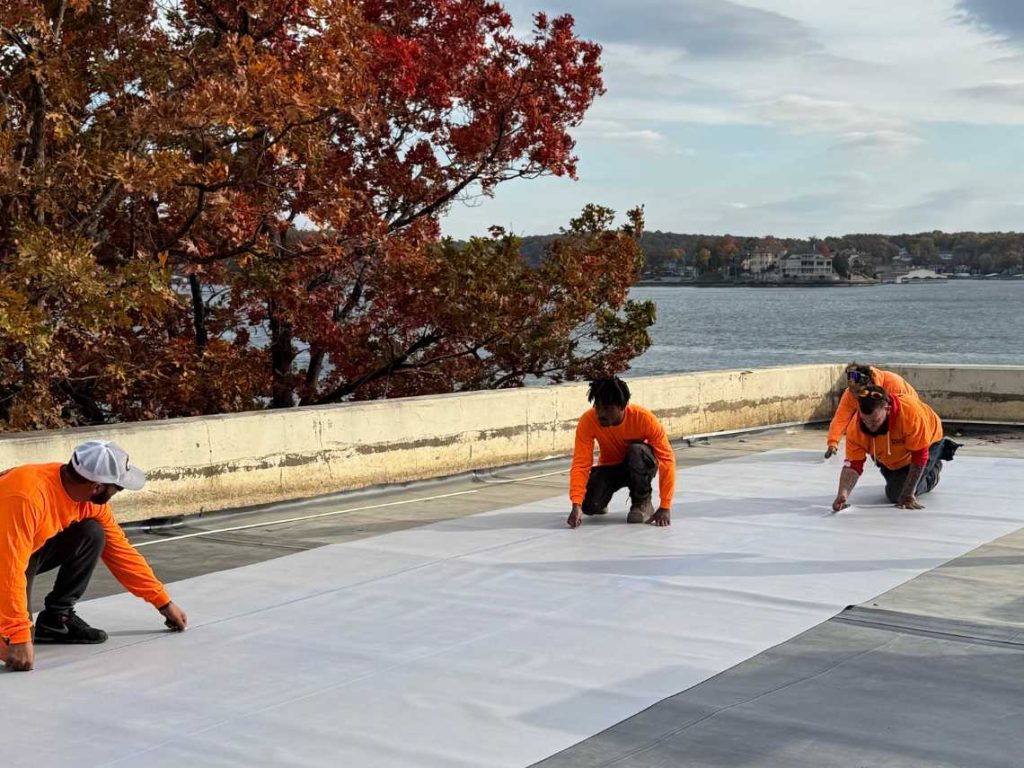
- Energy Efficiency Goals: A new roofing system, particularly a white reflective membrane, can significantly lower your cooling costs. This potential for energy savings can help offset the cost of replacement over time.
- Future Plans for the Building: If you plan to sell the property in the next few years, a cost-effective repair might be sufficient. If you are staying long-term, a replacement adds value and reliability.
- Budget and Timing: Sometimes, the budget for a major capital project isn’t available. In these cases, a durable repair can buy you the time needed to secure financing for a replacement.
The Role of Proactive Maintenance
Many expensive repair-or-replace dilemmas can be delayed or avoided entirely with a good maintenance plan. As a building owner, you can protect your investment by:
- Scheduling professional roof inspections at least twice a year (spring and fall).
- Checking the roof for damage after major storms.
- Keeping all drains, scuppers, and gutters free of debris to prevent ponding water.
- Limiting unnecessary foot traffic and using designated walkway pads.
- Addressing small problems immediately before they can escalate.
Proactive care helps you manage your roof on your terms, not in response to an emergency.
Making the Right Choice for Your Property
The decision between flat roof repair and replacement is one of the most important a commercial building owner can face. Repairs are effective for younger roofs with contained issues, while replacement is the definitive solution for older, failing systems.
The key is to honestly assess whether a repair is buying you valuable time or just throwing good money after bad. A professional inspection can give you the clear data needed to make a confident, financially sound decision.
Frequently Asked Questions
1. How long does a commercial flat roof typically last?
The lifespan depends on the material. EPDM and TPO roofs generally last 20-25 years, while PVC roofs can last 20-30+ years. Modified bitumen roofs typically have a lifespan of 15-20 years. Regular maintenance can extend these timelines.
2. Can a roof be repaired in the winter?
Yes, but it can be more challenging. Some sealants and adhesives require specific temperatures to cure properly. However, experienced contractors have methods and materials designed for cold-weather application to address emergency leaks.
3. What is a life-cycle cost analysis for a roof?
This analysis considers all costs associated with a roof over its entire life, including initial installation, maintenance, repairs, and energy savings. It helps determine the most cost-effective option over the long term, rather than just looking at the upfront price.
4. My roof has ponding water. Is that a sign I need a replacement?
Not necessarily. If the ponding is minor and evaporates within 48 hours, it may not be a major issue. However, persistent ponding water indicates a drainage problem that needs to be corrected. If left unaddressed, it will accelerate the roof’s deterioration and can lead to premature failure.
5. Will my business operations be disrupted during a roof replacement?
Professional commercial roofing contractors work to minimize disruption. They can often phase the project, establish safe work zones, and coordinate with you to ensure your business can continue operating with as little impact as possible.