
Key Takeaways
- A Superior Solution: For large facilities with aging metal roofs, retrofitting with a new single-ply membrane system is a smarter long-term investment than coating or full replacement.
- Eliminates Core Problems: This approach neutralizes common failure points of metal roofs, such as fastener back-out and seam separation, by creating a new, continuous watertight surface.
- Predictable Lifecycle Costs: A single-ply retrofit is a one-time capital investment with a 20-30+ year service life, avoiding the recurring maintenance and reapplication costs associated with coatings.
- Minimal Operational Disruption: The retrofit process keeps the existing metal roof in place, allowing facility operations to continue without the significant downtime and risk of a full tear-off.
- Scalable Performance: Single-ply systems are engineered for large-scale applications, providing consistent, reliable performance across massive roof areas where coatings often fail.
Large facilities don’t just have roofing problems…they have risk management problems. When you are responsible for hundreds of thousands of square feet under one roof, even minor failures can escalate into expensive disruptions. A single leak can shut down production lines, compromise inventory, and damage critical equipment. For this reason, choosing the right roofing solution carries more weight for large facilities than for nearly any other building type.
For owners of aging PBR or standing seam metal roofs, a single-ply roof retrofit has proven to be the most intelligent long-term strategy. It offers durability, predictability, and performance that temporary coatings and short-term repairs simply cannot match. This guide explains why retrofitting an existing metal roof with a new single-ply membrane is the ideal choice for large facilities, what problems it solves, and why it consistently outperforms other options.
What Is a Single-Ply Metal Roof Retrofit?
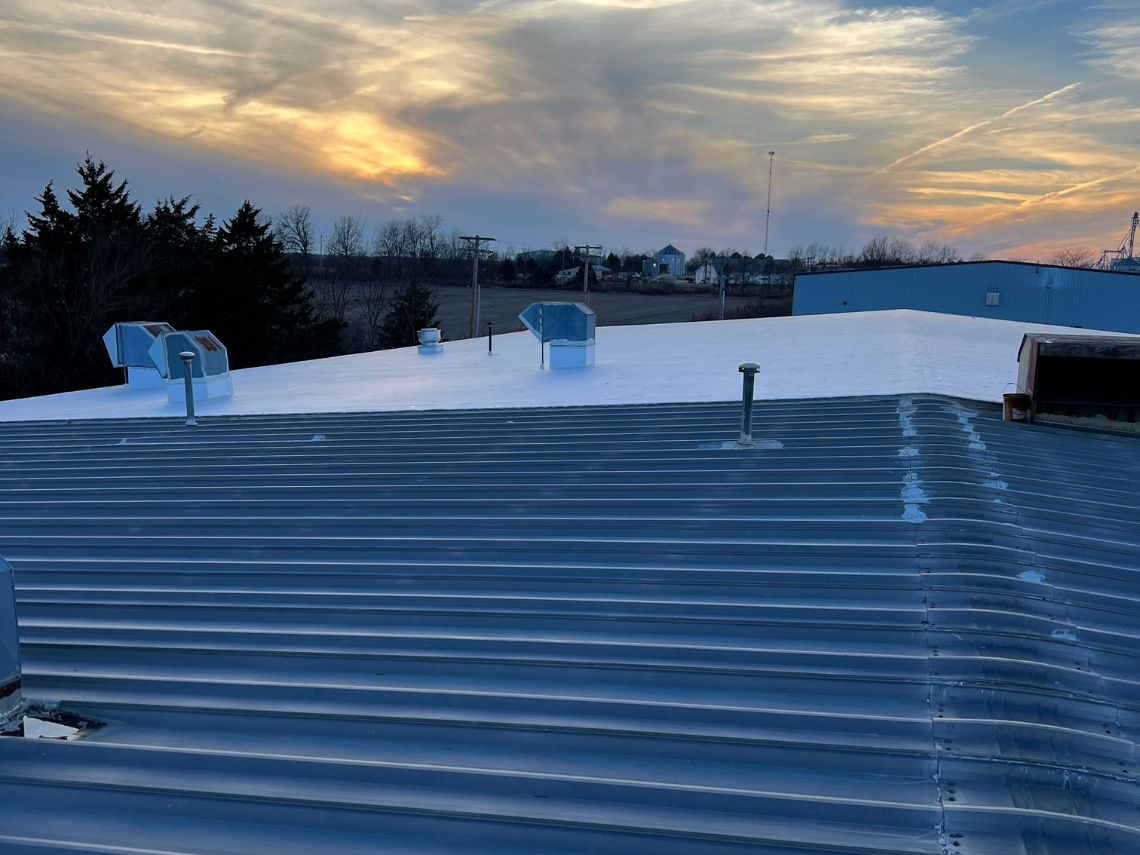
Let’s be clear: a single-ply retrofit is not a coating and it is not a full tear-off replacement. It is the process of installing a new, fully engineered membrane roofing system (using TPO, EPDM, or PVC) directly over an existing metal roof. The original roof remains in place, serving as a structural substrate for the new assembly.
The retrofit process involves:
- Leaving the existing metal roof in place.
- Installing flute-fill insulation cut to match the metal roof’s profile, creating a flat, uniform surface.
- Adding a layer of rigid ISO insulation or a cover board to improve R-value and provide a durable substrate.
- Installing a fully adhered single-ply membrane to create a seamless, continuous watertight layer.
The result is a modern roofing system that is no longer dependent on exposed fasteners, metal seams, or aging panel connections. For large facilities, this approach permanently solves problems instead of repeatedly managing them.
The Unique Roofing Challenges of Large Facilities
Large commercial and industrial buildings place unique demands on their roofing systems. These facilities typically involve:
- Massive Roof Areas: Acres of roof surface present thousands of potential leak points.
- Continuous Operations: Business activities cannot afford to shut down for a disruptive tear-off.
- Complex Penetrations: Numerous HVAC units, vents, and other equipment create multiple points of vulnerability.
- Long Ownership Timelines: Lifecycle cost and long-term performance are more critical than a low upfront price.
On metal roofs, these challenges are compounded by thermal movement, fastener fatigue, and seam separation. Over time, the maintenance burden becomes constant and unpredictable. This is where retrofitting, not coating, changes the entire equation.
Why Coatings Fall Short on Large Metal Roofs
Roof coatings are often marketed as a quick, low-cost fix. However, they are a temporary solution that remains dependent on the integrity of the aging metal roof underneath. On a large scale, this approach has significant drawbacks.
Coatings:
- Do not stop panel movement: The thermal expansion and contraction of a large metal roof will eventually cause coatings to crack and split.
- Rely on perfect surface preparation: Achieving consistent adhesion across hundreds of thousands of square feet is exceptionally difficult.
- Do not eliminate failure points: The thousands of fasteners and seams remain, hidden but still vulnerable.
- Require frequent reapplication: Coatings degrade over time, creating a recurring expense cycle rather than a one-time solution.
For a facility manager focused on long-term risk and budget predictability, coatings introduce uncertainty. A single-ply retrofit, in contrast, delivers reliability.
Why a Single-Ply Retrofit Is the Superior Choice
1. It Eliminates Thousands of Failure Points
The primary weaknesses of a metal roof are its fasteners and seams. A single-ply retrofit renders these thousands of potential leak points obsolete by covering them with a continuous, welded membrane system. Fewer failure points mean fewer emergency calls, less interior damage, and lower operational risk.
2. It Provides Predictable Lifecycle Costs
Facility owners and managers budget for decades, not just the current fiscal year. While coatings may appear cheaper initially, they come with recurring recoating cycles and escalating maintenance costs. A single-ply retrofit is a one-time capital improvement with a predictable service life of 20 to 30+ years, often backed by a comprehensive manufacturer warranty. This predictability is essential for managing large assets.
3. The Solution Is Designed to Scale
Single-ply membrane systems are engineered specifically for large-scale commercial and industrial applications. They are designed to perform consistently across massive roof areas and can be detailed cleanly around complex penetrations. This scalability is why single-ply systems are the dominant choice for warehouses, distribution centers, and manufacturing plants across the country.
4. It Improves Energy Performance at Scale
Energy efficiency becomes a powerful cost-saving tool on large roofs, where small gains multiply quickly. A single-ply retrofit allows you to add a significant layer of insulation where little or none existed. When paired with a reflective “cool roof” membrane, this upgrade can dramatically reduce heating and cooling costs, delivering a strong return on investment.
5. It Minimizes Disruption to Your Operations
Tearing off an existing metal roof on a large, active facility is a high-risk, high-cost endeavor. It is disruptive, creates debris, and exposes the building’s interior to the elements. A retrofit keeps the existing roof in place, allowing operations to continue below with minimal interruption. For facilities that cannot afford to shut down, this is a decisive advantage.
Is a Single-Ply Metal Roof Retrofit Right for Your Facility?
This advanced roofing solution is the ideal choice if:
- Your existing metal roof leaks repeatedly despite ongoing repairs.
- You have already tried coatings with disappointing results.
- A full tear-off and replacement is too disruptive or cost-prohibitive.
- You require a long-term, reliable roofing solution with predictable costs.
- You manage a large facility where operational continuity is paramount.
To confirm suitability, a professional evaluation by a qualified contractor is essential.

Work with a Contractor Who Specializes in Metal Roof Retrofits
Retrofitting an existing metal roof with a single-ply membrane is a specialized service that requires extensive experience, precise planning, and proper system design. At All Seasons Roofing, we specialize in delivering these solutions for large commercial and industrial facilities. We help building owners evaluate their options, avoid short-term fixes, and protect their assets with confidence.
If your large facility has an aging metal roof, retrofitting it with a new single-ply membrane system provides the long-term performance, predictable costs, and operational stability that your business requires.
Contact All Seasons Roofing today to schedule a professional evaluation and determine if a single-ply metal roof retrofit is the right move for your facility.
Frequently Asked Questions (FAQ)
1. How does a retrofit impact my building’s insurance?
A new, fully warranted retrofit system can positively impact your insurance. By eliminating chronic leaks and upgrading the roof to modern standards, you reduce property risk, which may lead to more favorable premiums.
2. What is the expected ROI on a single-ply retrofit for a large facility?
The return on investment comes from multiple areas: dramatically reduced maintenance and repair costs, significant energy savings from improved insulation and reflectivity, and the avoidance of costly operational shutdowns due to leaks.
3. Can a retrofit be performed in sections to manage cash flow?
Yes, for very large facilities, a phased approach is often possible. A qualified contractor can work with you to develop a multi-year plan that addresses the most critical roof sections first, allowing you to manage the project within your capital budget.
4. How does a retrofit handle complex roof layouts with extensive equipment?
Single-ply membranes are ideal for complex roofs. The flexible material can be expertly detailed and heat-welded around HVAC curbs, vents, pipes, and skylights to create a durable, monolithic seal, which is a significant advantage over mechanical flashing and sealants.
5. What kind of warranty comes with a single-ply metal roof retrofit?
Unlike short-term or prorated coating warranties, a professionally installed retrofit system is often eligible for a comprehensive manufacturer’s NDL (No Dollar Limit) warranty. These warranties can last for 20 years or more and cover both materials and workmanship.

