Key Takeaways
A commercial roof inspection covers six key areas building owners should understand to prevent costly damage and premature failure.
- Commercial roofs should be inspected after significant hail or high winds, before and after winter, and whenever another contractor has performed rooftop work.
- All Seasons Roofing recommends examining six areas: the roof surface, drainage system, seams and flashings, penetrations, rooftop equipment, and interior warning signs.
- Drainage maintenance is one of the simplest preventive steps — clogged drains and scuppers contribute to ponding, membrane deterioration, and structural loading.
- Building owners can safely monitor interior conditions and document visible changes, but seam evaluation, moisture investigation, and storm-damage assessment require a trained roofing professional.
- Dated inspection reports and photographs create a documented pre-storm record, which can be critical for insurance claims and warranty maintenance.
A commercial roof is a major investment, but many building owners don’t give it much thought until water starts coming through the ceiling.
By then, a relatively small roofing problem may have already damaged insulation, decking, ceilings, equipment, or the interior of the building.
Regular commercial roof inspections can identify problems earlier, create a documented history of the roofing system, and help owners make better decisions about maintenance and repairs.
That doesn’t mean building owners should climb onto the roof and perform their own technical inspection. Owners and facility managers can safely monitor other conditions, while other conditions should be evaluated by a trained commercial roofing professional.
Here is what should be included in a thorough commercial roof inspection.
When Should a Commercial Roof Be Inspected?
Commercial roofs should be inspected regularly rather than waiting for a leak to develop. The appropriate schedule can depend on the roofing system, building use, age, warranty requirements, and surrounding conditions.
There are also certain events that should trigger an additional inspection.
A commercial roof should be considered for inspection after significant hail or high winds, before winter, after severe winter weather, whenever unexplained interior moisture appears, and after another contractor has performed work on the roof.
That last one is particularly important.
HVAC technicians, electricians, plumbers, telecommunications contractors, and other trades frequently access commercial roofs. Even good contractors can accidentally puncture a membrane, disturb flashing, drop equipment, or make a new penetration without properly integrating it into the roofing system.
Fixing those problems shortly after the work occurs is considerably easier than trying to determine what happened six months later.

1. Inspect the Roof Surface
The roof surface is the obvious place to begin, but what you’re looking for depends on the roofing system.
TPO, PVC, EPDM, built-up roofing, modified bitumen, and commercial metal roofs don’t fail in exactly the same ways.
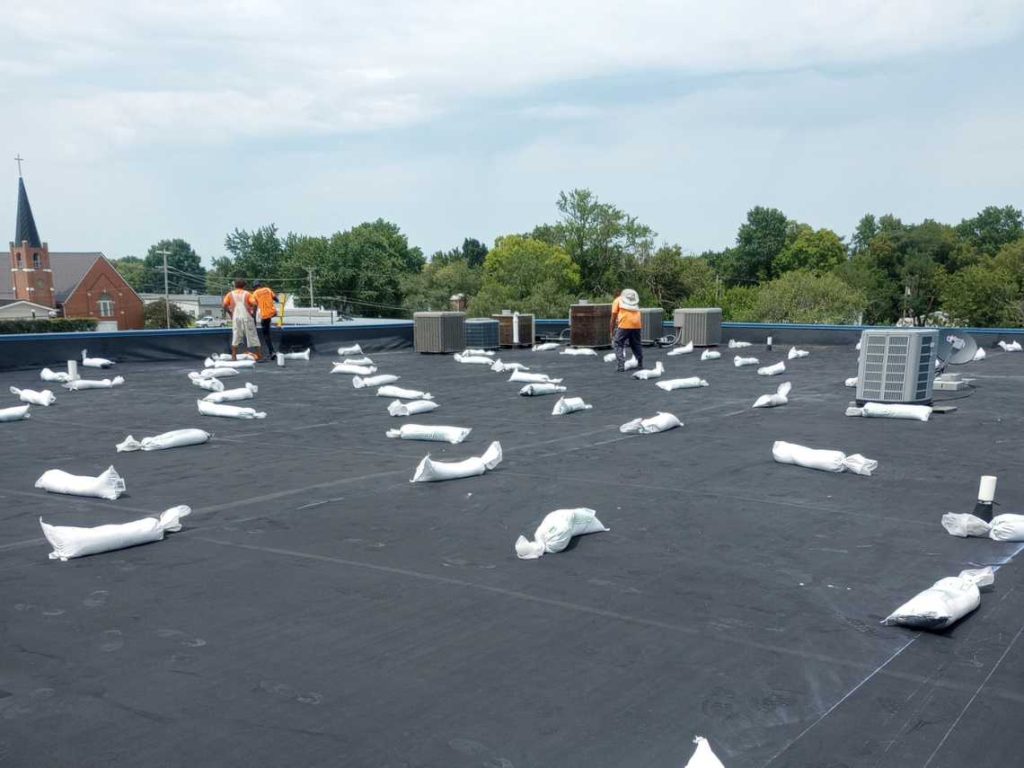
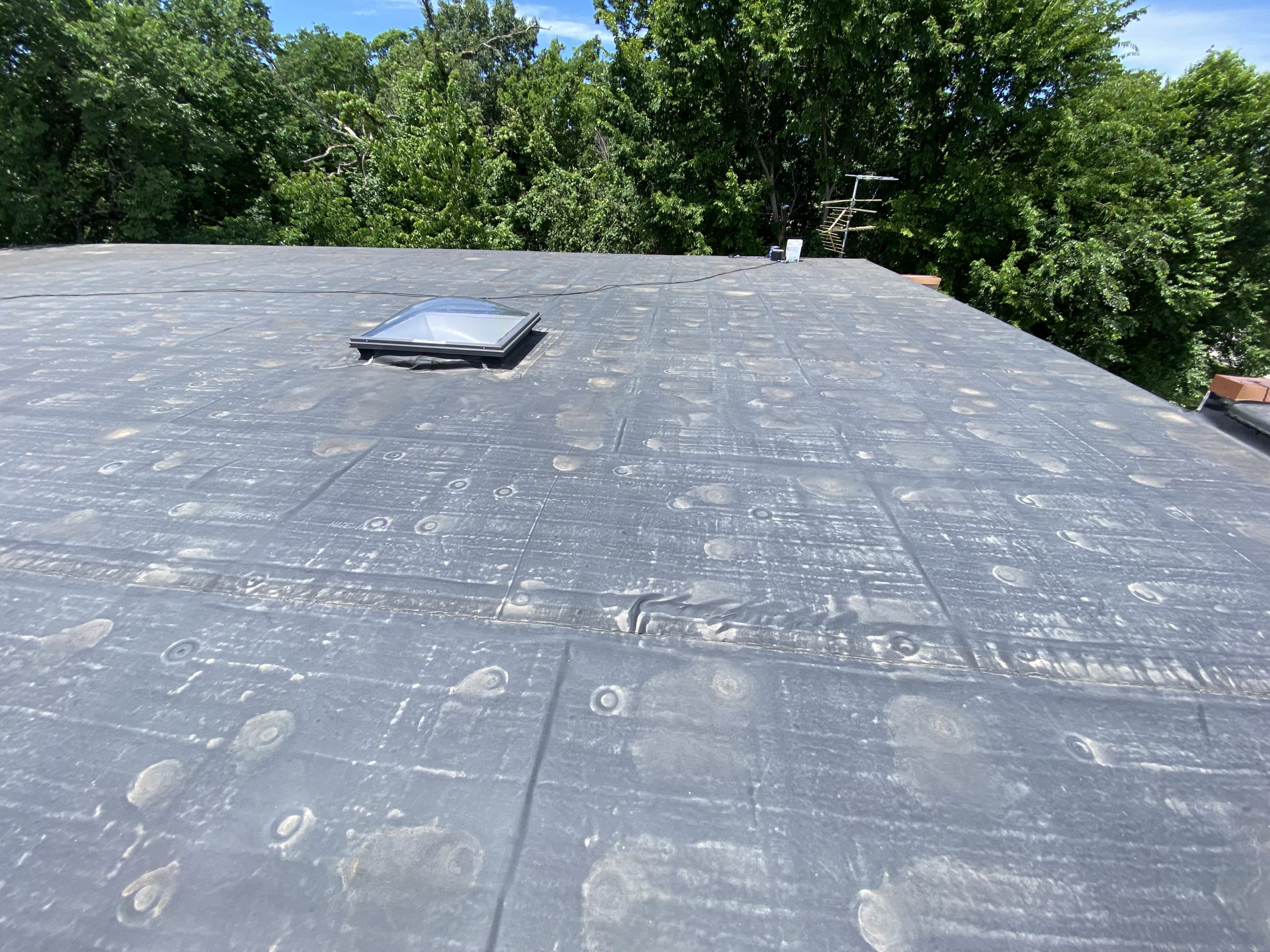
On single-ply membrane roofs, an inspection should look for punctures, cuts, displaced membrane, unusual wrinkles, damaged areas, previous repairs, and other changes in the roof surface.
Built-up and modified bitumen systems should be checked for deterioration, damaged cap sheets or surfacing, open laps, blisters, and physical damage.
Metal roofs require attention to panels, fasteners where exposed, seams, transitions, closures, and evidence of movement or corrosion.
An owner may be able to notice obvious damage from a designated safe location, but determining whether a condition requires repair is better left to someone familiar with that particular roofing system.
2. Check the Roof Drainage System
Water needs somewhere to go.
Commercial roofs commonly use internal drains, scuppers, gutters, downspouts, or some combination of these systems. Leaves, trash, roofing debris, vegetation, and other materials can restrict drainage.
The inspection should verify that drainage components are open and functioning properly.
Evidence of prolonged ponding should also be documented. Some water immediately following rainfall isn’t necessarily unusual, but areas that repeatedly hold water deserve further investigation.
Poor drainage can contribute to membrane deterioration, leaks, structural loading, freeze-thaw problems, and premature roof deterioration.
Keeping drains and scuppers clear is one of the simplest ways to prevent avoidable roofing problems.
3. Inspect Seams and Flashings
The field of the roof is only part of the system.
Many roof problems occur where materials meet, terminate, or change direction.
A professional inspection should examine membrane seams along with flashing at walls, curbs, edges, transitions, and other critical locations.
Loose materials, movement, deteriorated components, failed terminations, or questionable previous repairs should be documented.
Some problems can be visually obvious. Others aren’t.
For example, determining whether a welded single-ply seam is properly bonded may require probing by a roofing professional. Building owners shouldn’t attempt to pull, pry, or probe seams themselves.
4. Examine Roof Penetrations
Every penetration creates another location that must remain watertight.
Commercial roofs can contain plumbing vents, exhaust pipes, conduits, gas lines, equipment supports, pitch pockets and numerous other penetrations.
An inspection should examine the roofing and flashing around each penetration for movement, deterioration, damage, failed sealants where applicable, or evidence that the penetration has been modified since the roof was installed.
New penetrations deserve particular attention.
If another contractor installs equipment or runs a new pipe or conduit through the roof, the penetration needs to be properly incorporated into the existing roofing system.
On a manufacturer-warranted roof, modifications need to meet the roofing manufacturer’s requirements. And the manufacturer must be made aware of new roof top equipment to maintain the roofing warranty.
5. Inspect Rooftop Equipment
HVAC units and other rooftop equipment deserve their own portion of the inspection.
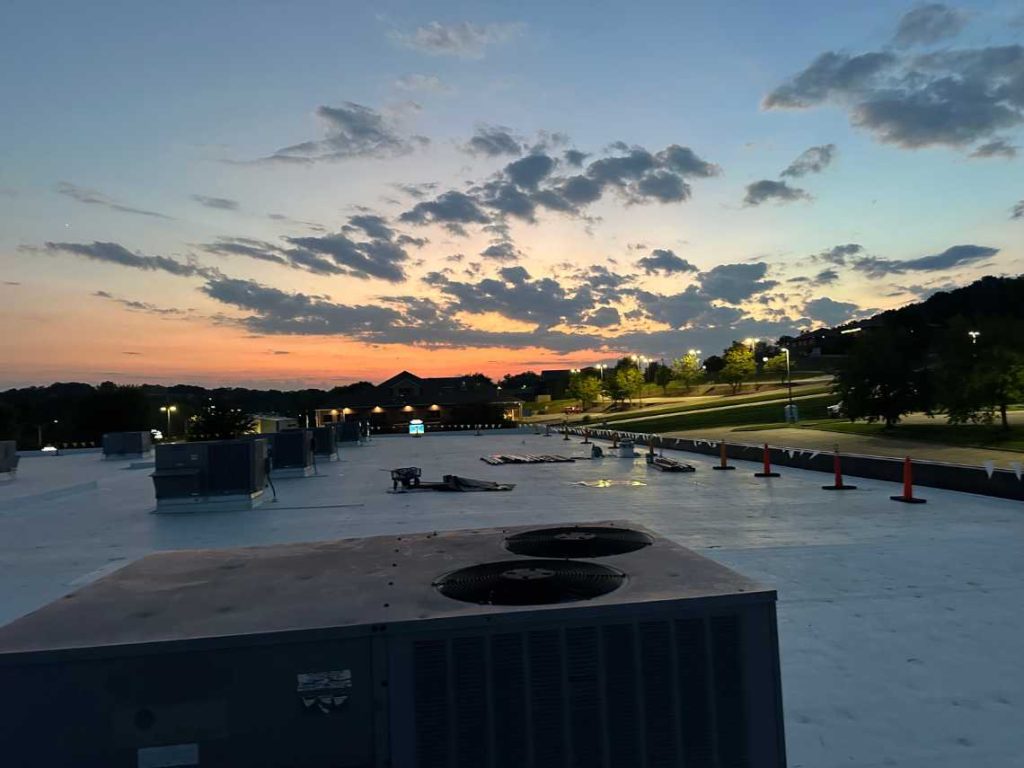
The roofing around curbs and equipment should be examined for damage, and the surrounding area should be checked for discarded screws, sheet metal, tools, panels, or other debris that could damage the membrane. Through normal weather cycles screws can back out and access panels can fall of HVAC equipment.
Service traffic itself can create problems.
Technicians repeatedly walking the same path, placing equipment directly on the membrane, or removing access panels can cause damage that has nothing to do with the original roof installation.
This is one reason we recommend inspecting the roof after significant rooftop contractor work.
It’s also a good reason to maintain a roof access log documenting who was on the roof, when they were there, and what work they performed.
6. Look for Warning Signs Inside the Building
A commercial roof inspection doesn’t necessarily begin on the roof.
Building owners and facility managers are often in the best position to recognize changes inside the building.
Water stains, wet ceiling tiles, peeling paint, damp insulation, unexplained moisture, musty odors, or water running down walls should be documented and investigated.
Pay attention to when the problem occurs as well.
Does it happen during heavy rain? Wind-driven rain? Snow melt? Only after certain HVAC equipment operates?
That information can be extremely useful when diagnosing the source.
But remember that the opposite is also true:
A roof doesn’t have to be leaking inside the building to have a problem.
Storm damage, loose flashing, damaged membrane, wet insulation, or deteriorating components may exist before water becomes visible inside.

What Can a Building Owner Safely Inspect?
Building owners don’t need to become roofing inspectors.
You can monitor interior conditions, document visible changes, keep records of leaks and repairs, observe drainage or exterior conditions from safe locations, and keep track of who accesses the roof.
If your building has established safe roof access and your company’s safety procedures allow it, obvious conditions may also be observed without disturbing roofing components.
But don’t put yourself or an employee at risk simply to inspect the roof.
Commercial roofs can contain unprotected edges, skylights, roof openings, slippery surfaces, electrical hazards, and other conditions that aren’t obvious to someone unfamiliar with rooftop work.
What Should Be Left to a Commercial Roofing Professional?
A trained commercial roofing professional should handle inspections involving fall exposure, detailed seam evaluation, destructive testing, core samples, moisture investigation, suspected wet insulation, storm-damage evaluation, warranty-related issues, and determining whether a roof can be repaired or should be replaced.
A professional can also distinguish between something that looks unusual and something that actually represents a roofing failure.
That’s important because unnecessary repairs can be almost as frustrating as missing a real problem.
Document What You Find
Every inspection should create a record.
At minimum, documentation should identify the inspection date, roof areas inspected, conditions observed, photographs taken, repairs recommended, and repairs completed.
Over time, those records create a documented history of the roof—and that history can become extremely valuable if the building ever experiences storm damage.
For example, if an inspection performed six months before a hailstorm documents the roof with dated photographs and shows no evidence of the damage discovered after the storm, you now have a clear record of the roof’s pre-storm condition.
That can help establish when damage occurred instead of trying to reconstruct the condition of the roof after the fact.
The same documentation can show that previous deficiencies were repaired, drains were maintained, flashing was secure, and the roofing system was being actively maintained before the loss.
Inspection records are also valuable for budgeting future repairs, evaluating recurring leaks, planning replacement, maintaining a manufacturer warranty, and determining whether damage occurred after another contractor accessed the roof.
Don’t rely on someone’s memory of what the roof looked like three years ago. Document it with dated inspection reports and photographs.
A Roof Inspection Is Only Valuable If You Act on It
Finding a small problem during an inspection is usually good news.
A loose flashing, puncture, clogged drain, or damaged section of membrane may be relatively inexpensive to address when caught early.
Ignore it long enough and the problem can allow water into the roofing assembly, saturate insulation, damage the deck, and eventually enter the building.
That’s where preventive roof maintenance pays for itself.
At All Seasons Roofing, our goal isn’t simply to find leaks. We help commercial building owners understand the condition of their roofing systems, identify problems before they become larger failures, document roof conditions, and develop a practical plan for maintaining the roof.
Regular inspections are also an important part of our Roof Guard preventive maintenance approach, helping building owners move away from emergency repairs and toward planned roof management.
If you’re unsure about the condition of your commercial roof, or it has been through a significant storm, winter weather, or recent rooftop construction, contact All Seasons Roofing to schedule a professional commercial roof inspection.

Commercial Roofing Checklist: Frequently Asked Questions
Should I Perform a Roof Inspection Myself or Have a Professional Do So?
You can safely handle basic visual checks yourself, but a licensed professional should evaluate seams, flashings, and storm damage. Building owners are well-equipped to monitor interior warning signs, like water stains or musty odors, and document visible surface changes with photos.
However, evaluating seam integrity, investigating hidden moisture, and assessing storm damage require trained eyes and specialized tools. All Seasons Roofing recommends pairing your own routine walkthroughs with periodic professional inspections to catch issues before they become costly repairs.
How Often Do I Need to Inspect My Roof?
At minimum, inspect your commercial flat roof twice a year, in the spring and fall, plus after any major weather event. Regular inspections help you catch small problems, like minor ponding or a lifted seam, before they turn into leaks or structural damage.
You should also schedule an inspection whenever another contractor performs rooftop work, such as HVAC servicing or satellite installation. Equipment technicians don’t always notice (or report) accidental membrane punctures, so a follow-up check protects your roof and your warranty.
Is There a Time of Year When It’s Best to Inspect My Commercial Flat Roof?
Yes. The best windows are before and after winter, since freeze-thaw cycles and ice accumulation put extra stress on your membrane and drainage system. An inspection also makes sense anytime your roof experiences significant hail or high winds.
A pre-winter check lets you clear debris and confirm drainage is working before snow and ice arrive. A post-winter check catches any damage from the season so you can address it before spring storms add to the problem.
How Do I Know When It’s Time to Contact a Professional?
Contact a professional as soon as you notice ponding water that doesn’t drain within 48 hours, visible seam separation, or interior signs like stains, sagging, or a musty smell. These are strong indicators of a developing issue that can worsen quickly if left unaddressed.
You should also call a professional after any significant storm, before a known warranty deadline, or whenever you’re unsure what you’re looking at. All Seasons Roofing’s team can assess all six key inspection areas, the roof surface, drainage system, seams and flashings, penetrations, rooftop equipment, and interior warning signs, and provide a documented report for your records and insurance needs.