
Key Takeaways
- Condition determines candidacy: A commercial roof coating only works when the existing roof is structurally sound, dry, and largely leak-free. It protects a serviceable roof; it does not rebuild a failing one.
- A coating is not a replacement: Coatings will not remove trapped moisture, replace wet insulation, repair a damaged deck, or correct poor drainage. Applied to a compromised roof, they mask problems instead of solving them.
- Timing drives value: Coating a roof at the right point in its service life can delay replacement, improve reflectivity, and preserve an otherwise functional system at a lower cost.
- White-over-black EPDM needs careful evaluation: Switching a dark EPDM roof to a reflective white surface can shift the dew point and cause condensation, adhesive failure, and delamination under certain conditions.
- Start with an inspection, not a product: The right solution—repair, maintenance, coating, partial replacement, or full reroof—should be determined by a professional evaluation of the entire roof assembly, not a single product recommendation.
If you have been researching options for your commercial roof, you have probably seen claims that a roof coating can add years of service life while saving thousands of dollars.
Sometimes that is true.
Other times, a coating simply covers problems that should be repaired or replaced.
The most important question is not, “Which coating should I use?” It is, “Is my roof actually a good candidate for coating?”
For many commercial building owners, a roof coating can be a smart investment. But it only works when the existing roof is still structurally sound and the underlying system is dry and stable.
This guide explains when roof coatings make sense, when they do not, and what building owners should understand before making that decision.
What Is a Commercial Roof Coating?
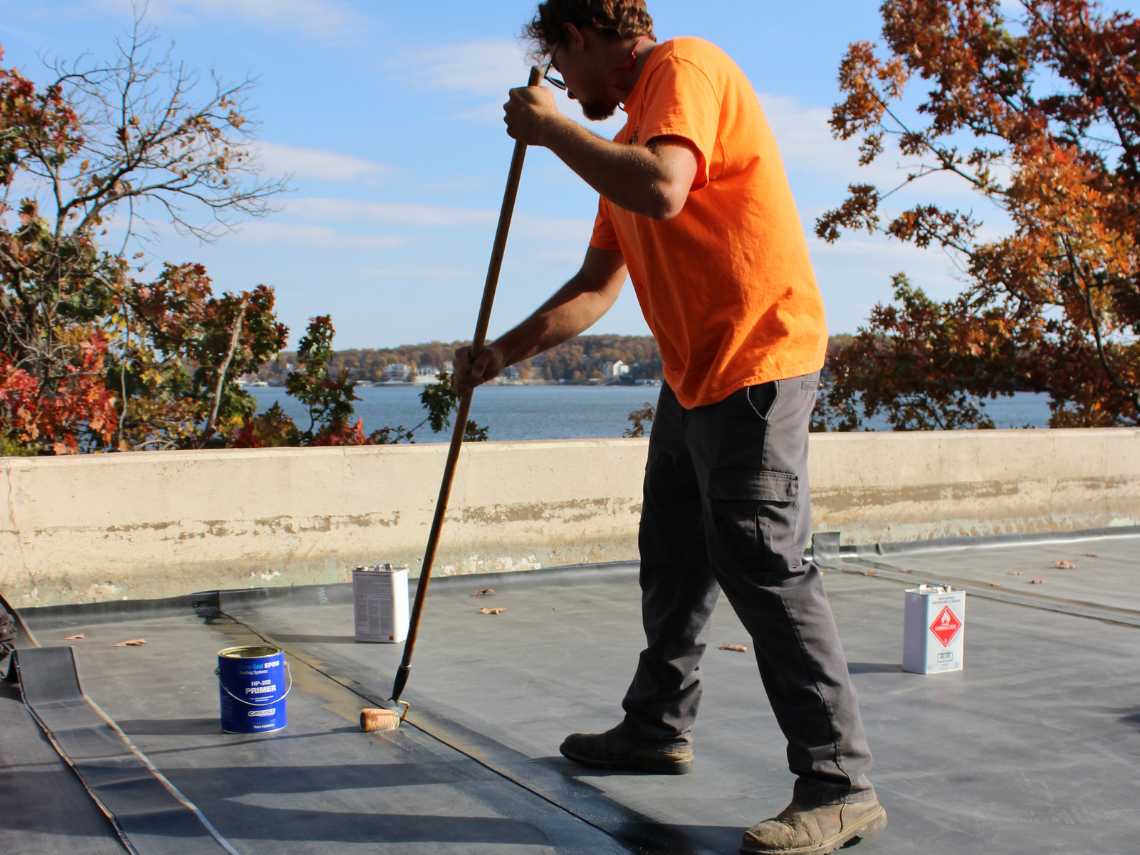
A commercial roof coating is a fluid-applied material installed over an existing roofing system. Once cured, it creates a protective surface designed to reduce weathering and extend the useful life of the roof below it.
Depending on the system, a coating may help:
- Protect the roof from ultraviolet exposure
- Improve reflectivity
- Reduce surface wear
- Seal minor surface defects
- Delay the need for replacement
When installed on the right roof, coatings can add useful service life at a lower cost than a complete replacement.
The key phrase is the right roof.
A Coating Is Not a Roof Replacement
A coating does not rebuild a failing roofing system.
It does not replace wet insulation, repair a damaged deck, stop major panel movement, or correct poor drainage. It also does not remove moisture that is already trapped inside the roof assembly.
A coating protects the roof that is already there.
If the roof is dry, stable, and in good condition, that can be a good use of money. If the roof has widespread leaks or hidden damage, coating over it can create more problems than it solves.

When Is a Roof Coating a Good Idea?
A commercial roof coating may make sense when:
- The roof is structurally sound
- Leaks are minimal or nonexistent
- Existing insulation is dry
- Seams, flashing, and penetrations can be repaired properly
- Drainage is functioning as intended
- The owner wants to extend the roof’s service life before replacement
This is where coatings provide the most value.
A roof that is still performing but beginning to show surface aging may benefit from additional protection. Coating at the right point in the roof’s life can help delay replacement and preserve an otherwise serviceable system.
When a Coating May Not Be the Best Choice
A coating is usually a poor choice when the roof already has:
- Multiple active leaks
- Saturated insulation
- Failed seams or flashing
- Extensive corrosion
- Structural concerns
- Repeated repairs that have not solved the problem
- Significant ponding water
Once water has entered the roofing assembly, coating the surface does not remove it. Wet insulation loses R-value, can contribute to corrosion, and may weaken adhesive bonds beneath the membrane.
A coating may make the roof look better while the underlying system continues to deteriorate.
In those cases, targeted replacement, a membrane-over-metal system, or a full reroof may provide better long-term value.
A Special Caution with White Coatings Over Black EPDM
Building owners should be especially careful when considering a white reflective coating over an existing black EPDM roof.
Changing the roof from a dark surface to a highly reflective white surface changes how heat moves through the roofing assembly. In certain buildings and climate conditions, that can move the dew point toward the underside of the EPDM membrane.
If warm, moisture-laden air from inside the building reaches that colder surface, condensation may form within the roof assembly.
In our experience, that moisture can weaken the adhesive bond on fully adhered EPDM systems and contribute to delamination within about five years under certain conditions.
The risk depends on several factors:
- Insulation thickness and location
- Interior humidity
- Whether a vapor retarder is present
- The condition of the membrane and adhesive
- Building use
- Local climate
This does not mean a white coating should never be installed over black EPDM. It means the entire roof assembly should be evaluated before making a major change to surface temperature and reflectivity.
That decision should involve more than checking whether the membrane looks good from the top.
What About Metal Roofs?
Metal roofs are another area where coatings can work well, but timing matters.
If a metal roof is still largely leak-free, structurally sound, and only showing surface oxidation or aging, a coating may help protect the panels and extend service life.
If the roof already has recurring leaks, loose fasteners, failed seams, trapped moisture, or widespread corrosion, coating over it may only delay a larger problem.
In those situations, installing a new insulated membrane roofing system over the existing metal roof may be a better option. That approach creates a new roofing assembly instead of depending on the old metal roof to keep performing.
Choosing the Right Coating
If the roof is a good candidate for restoration, the next step is choosing the correct coating.
Common options include:
- Silicone
- Acrylic
- Polyurethane
- Asphalt-based coatings
Each performs differently depending on the existing roof type, drainage, climate, exposure, and building use.
Silicone is often selected where ponding water or UV exposure is a concern. Acrylic can be a cost-effective option on roofs with good drainage. Polyurethane offers strong abrasion resistance and durability in certain applications.
The right material matters, but the condition of the existing roof matters more.
Start with an Inspection, Not a Product
The best roofing recommendation should begin with an inspection, not a sales pitch.
A commercial roofing contractor should evaluate:
- The condition of the membrane or metal panels
- Existing leaks and repair history
- Moisture within the roof assembly
- Drainage conditions
- Insulation and deck condition
- Compatibility with the proposed coating
In some cases, moisture scanning or core cuts may be needed before making a recommendation.
That inspection helps determine whether the right answer is a repair, maintenance plan, coating, partial replacement, or complete reroof.
The point is not to force every roof into the same solution.
Commercial roof coatings can be a useful tool.
When applied to a dry, stable roof at the right time, they can extend service life, improve reflectivity, and delay replacement.
But coatings are not a cure-all.
If the roof has multiple leaks, wet insulation, failed seams, or underlying moisture problems, another solution may protect the building better and cost less over time.
At All Seasons Roofing, our goal is not to sell every building owner the same product. It is to identify the condition of the roof and recommend the solution that makes the most sense for the building and the budget.
Contact All Seasons Roofing today to schedule a commercial roof inspection and find out whether your roof is a good candidate for coating, repair, or replacement.
Frequently Asked Questions
How long does a commercial roof coating last?
When applied to a dry, structurally sound roof by an experienced commercial roofing contractor, most coating systems deliver roughly 10 to 20 years of added service life, depending on the coating type, surface preparation, drainage, and climate exposure. The condition of the existing roof at the time of application has the greatest influence on long-term performance.
How do I know if my roof is a good candidate for a coating?
A roof is generally a good candidate when it is structurally sound, largely leak-free, and has dry insulation, functioning drainage, and repairable seams and flashing. A professional inspection—sometimes including moisture scanning or core cuts—is the most reliable way to confirm whether your roof qualifies before any coating is applied.
Can a roof coating fix active leaks or wet insulation?
No. A coating protects the roof that is already in place; it does not remove trapped moisture, replace saturated insulation, or repair a damaged deck. Applying a coating over a roof with multiple active leaks or wet insulation usually masks the problem while the underlying system continues to deteriorate.
Is it safe to apply a white reflective coating over black EPDM?
It can be, but only after careful evaluation. Switching from a dark surface to a highly reflective white one changes how heat moves through the assembly and can shift the dew point toward the underside of the membrane. Under certain conditions, that can lead to condensation, adhesive failure, and delamination within about five years. Factors such as insulation, interior humidity, vapor retarders, and climate must all be reviewed first.
When does a coating make sense for a metal roof?
A coating works well on a metal roof that is still largely leak-free, structurally sound, and showing only surface oxidation or aging. If the roof has recurring leaks, loose fasteners, failed seams, trapped moisture, or widespread corrosion, a new insulated membrane-over-metal system typically provides better long-term value than a coating.
Which type of coating is best for my building?
It depends on your existing roof type, drainage, climate, exposure, and building use. Silicone is often selected where ponding water or heavy UV exposure is a concern, acrylic can be a cost-effective option on roofs with good drainage, and polyurethane offers strong abrasion resistance and durability. The right material matters, but the condition of the existing roof matters more.
What is the difference between a coating and a full roof replacement?
A coating is a fluid-applied protective layer that extends the life of a roof already performing well. A replacement or reroof rebuilds the roofing system, addressing wet insulation, failed components, and drainage issues that a coating cannot resolve. A professional evaluation determines whether a repair, coating, partial replacement, or complete reroof offers the best value for your building and budget.

