Key Takeaways
- Retrofit, Don’t Tear Off: A TPO retrofit installs a new insulated membrane system over your existing metal roof, avoiding the cost, debris, and operational disruption of a full tear-off replacement.
- Eliminates Common Metal Roof Failures: A continuous TPO membrane removes reliance on exposed fasteners and isolates the system from thermal movement, solving the leaks and seam separation that plague aging metal roofs.
- Improved Energy Efficiency: Adding flute-fill insulation, rigid ISO, and cover board boosts your building’s R-value, while TPO’s reflective white surface helps reduce cooling costs on large facilities.
- Manufacturer Warranty Protection: Professionally installed TPO retrofits often qualify for 20-year No Dollar Limit (NDL) warranties, including third-party manufacturer inspections that verify installation quality.
- A Smarter Alternative to Coatings: Unlike coatings that can mask trapped moisture and corrosion, a retrofit creates an entirely new watertight roofing assembly designed for long-term performance
When a commercial metal roof starts leaking, many building owners feel stuck between two expensive options: keep patching the problems or tear the entire roof off and start over.
There’s a smarter option that more commercial property owners are turning to: a TPO retrofit system.
Instead of removing the existing metal roof, a retrofit installs a new insulated TPO membrane system over the existing structure. The result is a modern roofing assembly that improves watertight performance, increases energy efficiency, and eliminates many of the long-term problems that aging metal roofs create.
For warehouses, manufacturing facilities, agricultural buildings, and large commercial properties, a TPO retrofit often delivers the best balance of cost, performance, and long-term reliability.
What Is a TPO Retrofit?
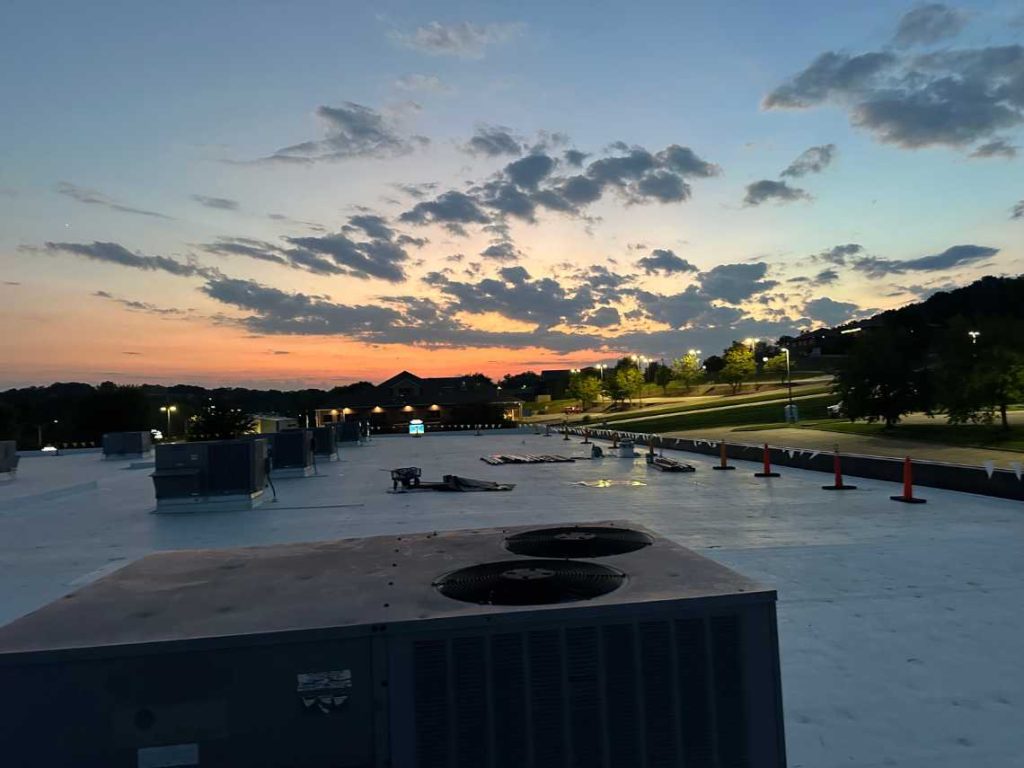
A TPO retrofit is the process of installing a new Thermoplastic Polyolefin (TPO) membrane roofing system over an existing metal roof.
Rather than tearing off the original roof, the existing metal panels remain in place as a structural substrate.
The retrofit assembly typically includes:
- The existing metal roof
- Flute-fill insulation cut to match the roof profile
- Rigid insulation and/or cover board
- A fully adhered TPO membrane system
This creates a completely new watertight roofing system above the old metal roof while avoiding the disruption and expense of a full tear-off.
Why Aging Metal Roofs Become a Problem
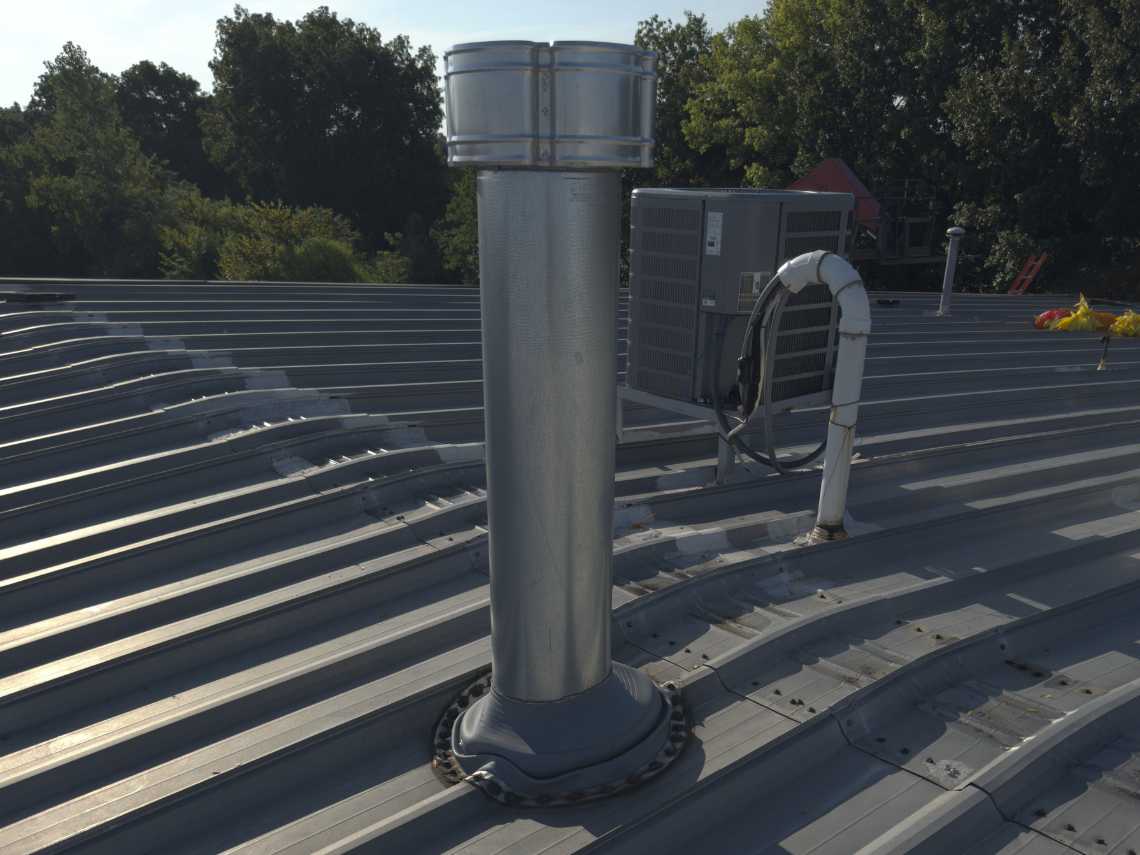
Commercial metal roofs are durable, but over time they develop predictable failure points.
Common issues include:
- Fastener back-out
- Failed rubber washers and gaskets
- Seam separation
- Thermal movement
- Recurring leaks around penetrations
- Corrosion and oxidation
On large facilities, these problems compound over time. What starts as a few leaks often turns into ongoing maintenance, repeated service calls, and interior damage concerns.
Eventually, building owners reach a point where repairs stop being cost-effective.
That’s where a retrofit begins to make sense.
How a TPO Retrofit Solves These Problems
A TPO retrofit does more than cover an old roof—it changes the roofing system entirely.
It Eliminates Exposed Fasteners as Leak Points
One of the biggest weaknesses in metal roofing is exposed fasteners.
Over years of expansion and contraction:
- Fasteners loosen
- Washers fail
- Penetrations begin leaking
A retrofit removes reliance on those fasteners by installing a continuous membrane system above the existing roof.
It Reduces Problems Caused by Thermal Movement
Metal roofs move constantly with temperature changes.
That movement stresses:
- Seams
- Flashings
- Fasteners
- Sealants
TPO retrofit systems isolate the new roofing assembly from much of that movement, reducing long-term stress on the waterproofing system.
It Improves Energy Efficiency
One of the major advantages of a TPO retrofit is the ability to upgrade insulation during installation.
Adding flute-fill insulation, rigid ISO insulation, and cover board improves overall thermal performance and can significantly reduce heating and cooling costs.
TPO also features a highly reflective white surface that helps reduce rooftop heat absorption.
For large facilities with high cooling demands, that can translate into measurable operational savings.
It Creates a New Watertight Roofing System
Patching and coatings still depend on the old metal roof continuing to perform properly.
A retrofit creates an entirely new roofing system above the existing roof.
The fully adhered TPO membrane provides:
- Heat-welded seams
- Continuous waterproofing
- Improved flashing integration
- Better long-term reliability
Instead of managing old leak points, the building receives a new roofing assembly designed for modern commercial performance standards.

Why TPO Retrofits Often Make More Sense Than Tear-Offs
A full tear-off replacement is disruptive, expensive, and labor-intensive.
Tear-offs often involve:
- Removing existing metal panels
- Increased landfill waste
- Exposing the interior during construction
- Longer installation timelines
- Greater operational disruption
For occupied facilities, these challenges matter.
A retrofit avoids many of these issues because the existing roof remains in place.
That means:
- Faster installation
- Reduced disruption to operations
- Less debris and noise
- Lower disposal costs
- Reduced risk of interior exposure
For many commercial facilities, avoiding downtime alone is a major advantage.
Why a TPO Retrofit Often Makes More Sense Than Coatings
Roof coatings absolutely have a place in commercial roofing—but timing matters.
Coatings work best when:
- The roof is still structurally sound
- Leaks are limited or nonexistent
- Insulation remains dry
- Seams and fasteners are stable
The problem is that many building owners wait too long.
Once a metal roof develops:
- Multiple active leaks
- Saturated insulation
- Significant movement issues
- Failing seams
- Ongoing repairs
A coating may only mask the problems temporarily.
Trapped moisture beneath coatings can lead to:
- Adhesion failures
- Continued corrosion
- Reduced insulation value
- Premature coating breakdown
A TPO retrofit addresses the system more comprehensively by creating a new insulated roofing assembly instead of relying on the old roof to continue functioning properly.
Long-Term Maintenance Benefits
TPO retrofit systems simplify future roof maintenance.
Compared to aging metal roofs with thousands of exposed fasteners, TPO systems offer:
- Easier inspections
- Simplified repairs
- Fewer active leak points
- Cleaner flashing details
- Improved long-term serviceability
This becomes especially important on large commercial buildings where maintenance costs add up quickly over time.
Manufacturer Warranties Matter
One major advantage of professionally installed TPO retrofit systems is access to manufacturer-backed warranties.
Many new TPO retrofit systems qualify for 20-year No Dollar Limit (NDL) warranties when installed by certified commercial roofing contractors.
An NDL warranty provides long-term protection because it covers both material defects and approved workmanship without a monetary cap on covered repairs. For building owners, that adds a significant layer of security and long-term predictability.
In many cases, manufacturer representatives inspect the completed installation before issuing the warranty.
That means:
- The system is independently reviewed
- Installation quality is verified
- Details and seam integrity are inspected
- Compliance with manufacturer specifications is confirmed
This is not simply a contractor saying the roof was installed properly—it is a manufacturer validating that the system meets engineered standards required for warranty coverage.
That third-party inspection and warranty backing is one of the major advantages a professionally installed TPO retrofit system has over patching, repeated repairs, or short-term coating solutions.

Is Your Building a Good Candidate for a TPO Retrofit?
TPO retrofit systems are commonly used on:
- Warehouses
- Manufacturing facilities
- Agricultural buildings
- Distribution centers
- Retail facilities
- Large commercial buildings
Not every roof qualifies, but many aging metal roofs are excellent retrofit candidates.
A professional roof evaluation can determine:
- Structural suitability
- Existing moisture conditions
- Drainage performance
- Insulation needs
- Retrofit feasibility
Work with a Contractor Who Understands Retrofit Systems
A retrofit is not simply installing a membrane over metal panels.
Proper retrofit design requires:
- Roof evaluation
- Insulation planning
- Drainage analysis
- Membrane integration
- Manufacturer-compliant detailing
At All Seasons Roofing, we specialize in commercial metal roof retrofits using engineered TPO systems designed for long-term performance.
We help building owners:
- Reduce recurring leak problems
- Improve energy efficiency
- Avoid unnecessary tear-offs
- Minimize operational disruption
- Extend the life of their facilities
A TPO retrofit is more than a repair—it’s a long-term upgrade for an aging commercial metal roof.
By installing a new insulated membrane system over the existing roof, building owners gain modern performance, improved efficiency, and long-term waterproofing without the disruption of a full tear-off.
If your metal roof has become difficult to maintain or repeatedly leaks, a TPO retrofit may be the smartest long-term solution.
Contact All Seasons Roofing today to schedule a roof evaluation and learn whether a TPO retrofit is right for your facility.

Frequently Asked Questions
What is the difference between a TPO retrofit and a roof coating?
A roof coating relies on the existing metal roof to keep performing properly, which can mask trapped moisture and ongoing corrosion. A TPO retrofit creates an entirely new insulated roofing assembly above the metal roof, with heat-welded seams and continuous waterproofing. For roofs with active leaks, saturated insulation, or failing seams, a retrofit is the more reliable long-term solution.
How does a TPO retrofit improve energy efficiency?
A retrofit allows you to add flute-fill insulation, rigid ISO insulation, and a cover board during installation, significantly improving your building’s R-value. TPO’s highly reflective white surface also reduces rooftop heat absorption. For large facilities with high cooling demands, this combination can translate into measurable operational savings.
Will a TPO retrofit qualify for a manufacturer warranty?
Yes. When installed by a certified commercial roofing contractor, many TPO retrofit systems qualify for 20-year No Dollar Limit (NDL) warranties. These warranties cover both material defects and approved workmanship without a monetary cap, and manufacturer representatives often inspect the completed installation before issuing coverage.
Can my business stay open during a TPO retrofit?
In most cases, yes. Because the existing metal roof remains in place as the structural substrate, there is no interior exposure during installation. This means faster timelines, less debris and noise, and minimal disruption to your daily operations.
Is my commercial metal roof a good candidate for a TPO retrofit?
Many aging metal roofs are excellent retrofit candidates, including warehouses, manufacturing facilities, agricultural buildings, distribution centers, and retail properties. A professional roof evaluation will assess structural suitability, existing moisture conditions, drainage performance, and insulation needs to confirm feasibility.
How is a TPO retrofit more cost-effective than a full tear-off?
A tear-off involves removing existing metal panels, increased landfill disposal costs, longer installation timelines, and greater operational disruption. A retrofit avoids these expenses by keeping the original roof in place, often delivering significant savings on large commercial facilities while still providing a new, fully warranted roofing system.
How long does a TPO retrofit system last?
When installed correctly with quality materials and proper insulation, a TPO retrofit system can deliver decades of reliable, watertight performance. Many systems qualify for 20-year manufacturer-backed warranties, and proactive maintenance can help extend that service life even further.